Graduate Research Assistant (GRA)
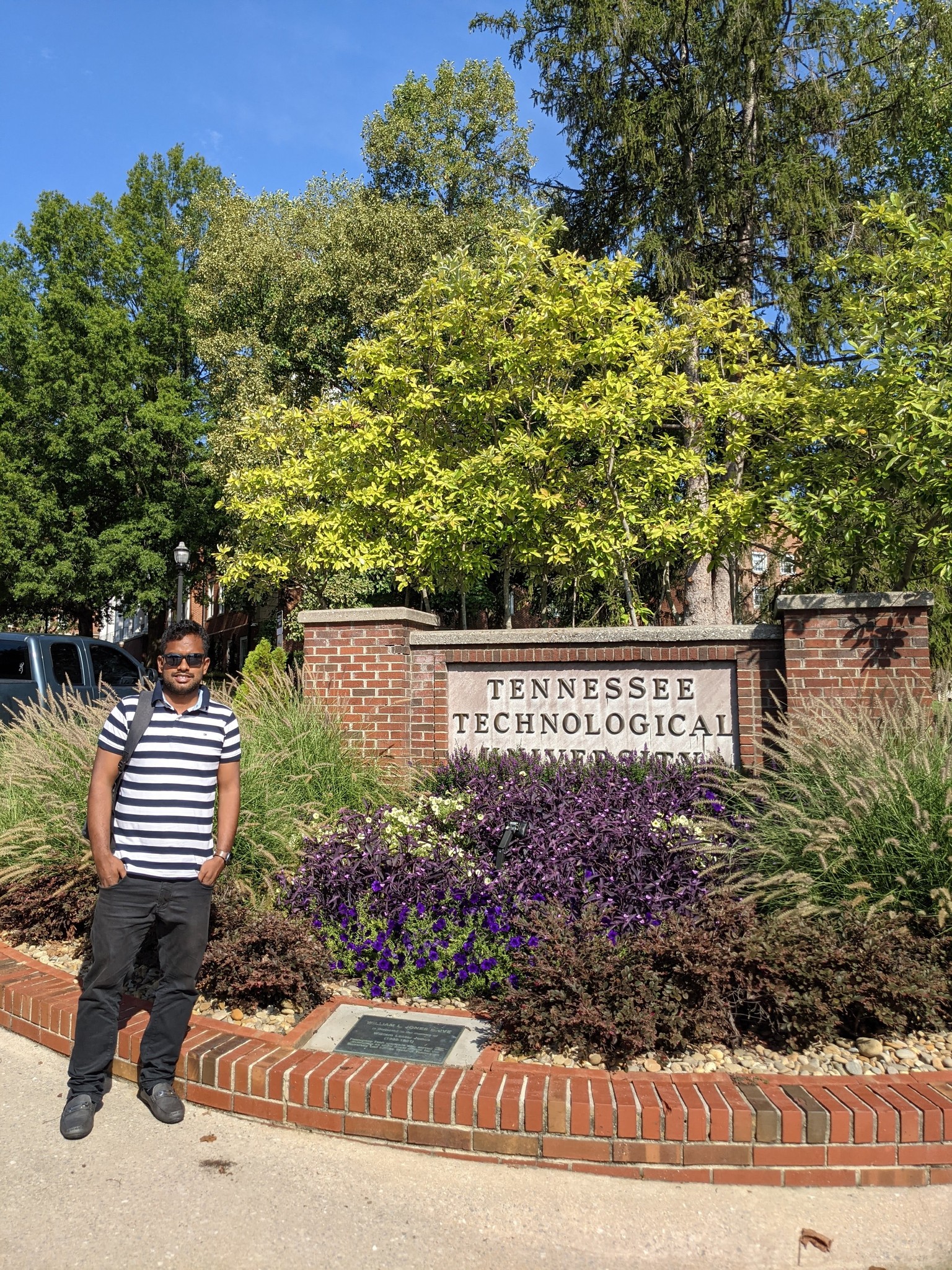
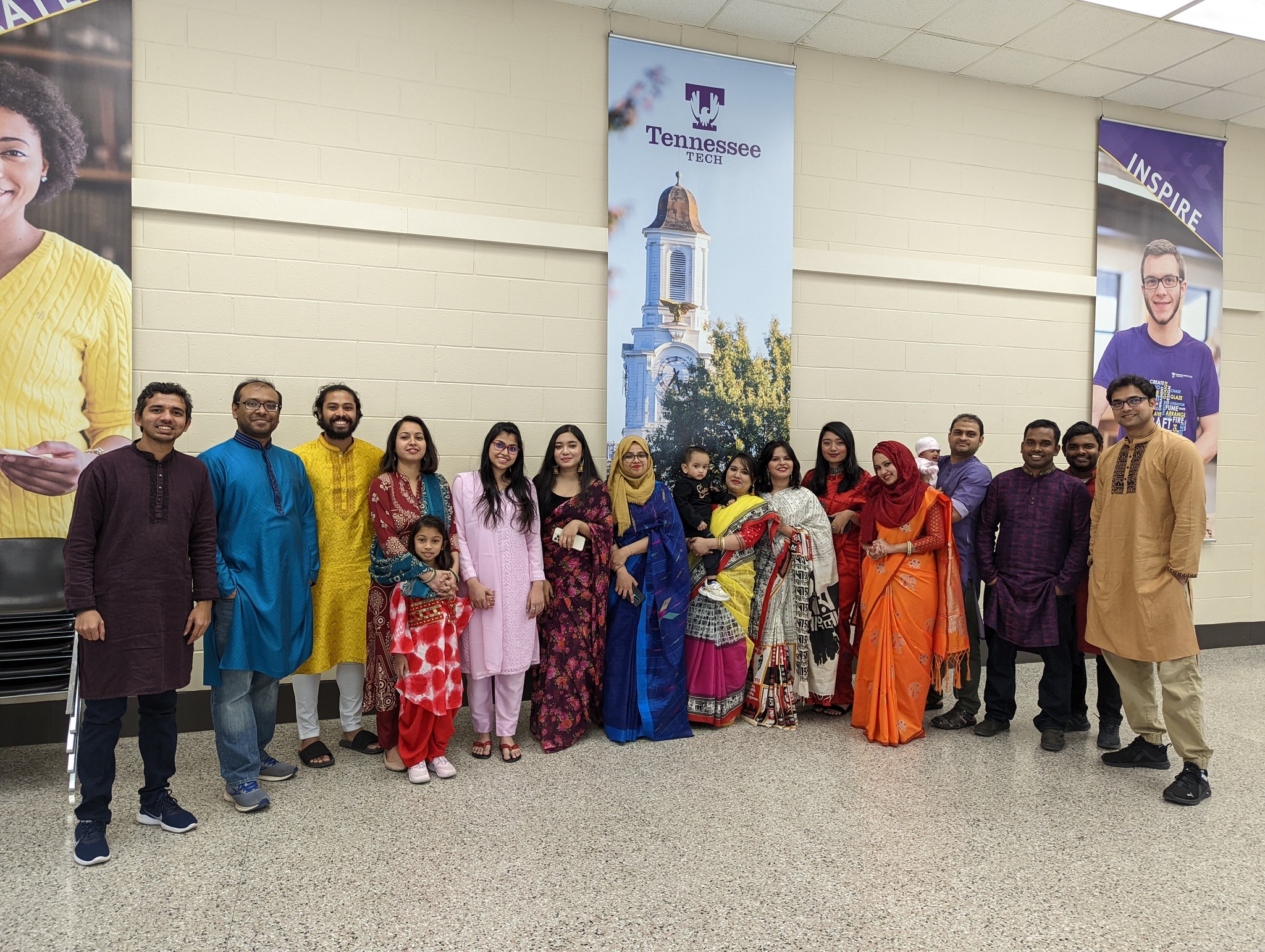
Tennessee Technological University, TN, USA
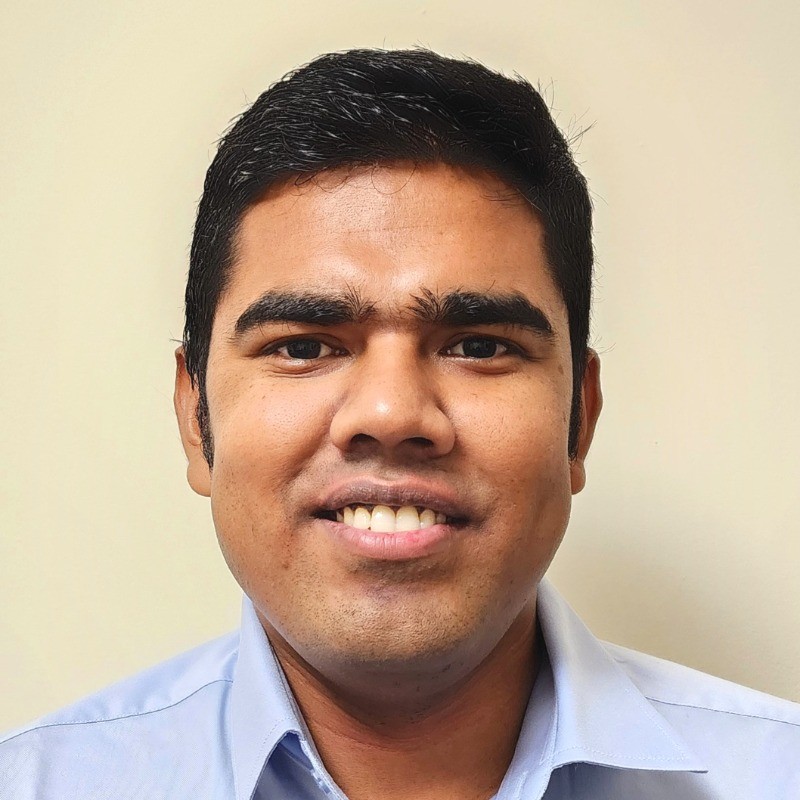
I'm Mamunur Rashid, a Ph.D. candidate and Graduate Research Assistant in the Department of Electrical and Computer Engineering at Tennessee Technological University, USA. My doctoral research focuses on electric mobility, sustainable transportation, and data-driven intelligent energy systems. Specifically, I work on electric vehicle (EV) charging demand forecasting, infrastructure planning, federated learning, and optimization frameworks that support large-scale EV integration into modern power grids.
My broader research interests include machine learning, deep learning, EV load modeling, synthetic data generation, charging infrastructure planning, and intelligent transportation systems. Throughout my Ph.D. journey, I have contributed several peer-reviewed journal articles and IEEE conference papers, proposing advanced predictive models and data-driven frameworks for EV charging systems. I have been recognized in the Elsevier–Stanford World’s Top 2% Scientists list for both 2024 and 2025, a distinction that reflects the global impact of my research contributions across electric mobility and machine learning.
Before joining Tennessee Tech, I completed my Master of Science in Electrical and Electronics Engineering Technology at Universiti Malaysia Pahang, Malaysia, followed by a Bachelor of Science in Electrical and Electronic Engineering from Pabna University of Science and Technology, Bangladesh. During my time at Universiti Malaysia Pahang, I contributed to several interdisciplinary projects involving EEG-based signal processing, brain–computer interfaces, and deep learning. I also served as a Research Assistant at Universiti Sains Malaysia and worked as a lecturer at Atish Dipankar University of Science and Technology in Bangladesh.
My long-term goal is to advance sustainable transportation and smart energy systems by developing scalable, reliable, and intelligent data-driven solutions that can support the next generation of electrified mobility.
Tennessee Technological University, TN, USA
School of Industrial Technology, University Sains Malaysia, Malaysia
Faculty of Electrical & Electronics Engineering Technology, University Malaysia Pahang, Malaysia
Atish Dipankar University of Science and Technology, Dhaka, Bangladesh
Ph.D. in Electrical & Computer Engineering
Tennessee Technological University, TN, USA
M.Sc. in Electrical & Electronics Engineering
University Malaysia Pahang, Pahang, Malaysia
B.Sc. in Electrical & Electronic Engineering
Pabna University of Science & Technology, Pabna, Bangladesh
Ranked as one of the Top 2% of researchers in Electrical and Electronic Engineering worldwide for four consecutive years, 2024, 2025 (Stanford University Research).
Awarded Graduate Research Assistantship by the Center for Manufacturing Research at Tennessee Technological University to support doctoral research. This assistantship covers the duration of the PhD journey from May 2022 to May 2026.
Awarded a Silver Medal at the Creation, Innovation, Technology & Research Exposition (CITREX-2021), Universiti Malaysia Pahang. The winning project developed an intelligent system for detecting hearing disorders using Auditory Evoked Potential (AEP) signals.
Received the Best Student Paper Award at the 3rd International Conference on BioSignal Analysis, Processing & System (ICBAPS) for the paper titled 'Five-class SSVEP response detection using Common Spatial Pattern (CSP)-SVM approach.
Awarded a Bronze Medal at the Creation, Innovation, Technology & Research Exposition (CITREX-2020), Universiti Malaysia Pahang. The project, titled 'Development of EEG-based Brain Computer Interface System to Control Home Appliances,' was recognized for its practical application in BCI technology.
Received the prestigious Bangladesh Sweden Trust Fund Scholarship which is covered the travel grant from Bangladesh to Malaysia for persuing Master's in University Malaysia Pahang, Malaysia.
Secured a top-10 position among 94 competing teams in Malaysia’s first-ever Brain-Computer Interface contest. The event was organized by Braintech and TusStar Malaysia to highlight innovations in neurotechnology.
A competitive research grant awarded by University Malaysia Pahang to support meritorious full-time research activities. The funding covered essential research expenditures, including materials, technical services, and conference fees.
Awarded the Master Research Scheme (MRS), a prestigious scholarship from Universiti Malaysia Pahang that provides a monthly allowance to full-time research candidates. Scholars are chosen based on competitive criteria and are required to contribute to academic duties and publish peer-reviewed research.
Secured graduate research assistanship from the Faculty of Electrical & Electronic Engineering at Universiti Malaysia Pahang, Malaysia. This position supported full-time research activities during the Master’s program from March 2019 to November 2020.
Awarded a Merit based scholarship by Pabna University of Science and Technology for maintaining academic excellence throughout the undergraduate program. This scholarship covered the academic sessions from 2011 to 2015.
The selected publication list is added in the following section.
The transition of the automotive sector to electric vehicles (EVs) necessitates research on charging demand forecasting for optimal station placement and capacity planning. In the literature, extensive studies have been conducted on model-based and probabilistic EV charging demand forecasting schemes. The studies provide a solid research foundation but result in complicated models with limited scalability. Meanwhile, emerging machine learning techniques bring promising prospects, yet exhibit suboptimal performance with insufficient data. Additionally, existing studies often overlook several critical areas such as overcoming data scarcity, security and privacy concerns, managing the inherent stochasticity of demand data, selecting forecasting methods for a specific feature, and developing standardized performance metrics. Considering the impact of the research topic, EV charging demand forecasting demands careful study. In this paper, we present a comprehensive survey of EV charging demand forecasting, focusing on both probabilistic and learning algorithms. First, we introduce the general procedure of EV charging demand forecasting, encompassing data sources, data pre-processing, and the key EV features. We then provide a taxonomy of existing EV charging demand forecasting techniques, followed by a critical analysis and comparative study of state-of-the-art research. Finally, we discuss open issues, which offer useful insights and future direction for various stakeholders.
Smart cities incorporating smart grid and intelligent transportation systems are an emerging paradigm that aims to improve the quality of life for residents through ubiquitous networking coverage, automation, and artificial intelligence (AI). However, the emergence of electric and autonomous vehicles (EAVs), the wide expansion of data centers, and the high integration of renewable energy impose heavy burdens on the ossified smart cities infrastructure. In this article, we develop a sustainable and adaptive digital twin (DT) framework to characterize smart cities with high fidelity and real-time synchronization between physical and digital spaces of smart city applications. Different from existing DT models, the developed framework considers the interconnections among multiple subsystems, where each subsystem is connected with real-world physical space to achieve real-time interaction. Considering large-scale system simulations and huge amounts of Internet-of-Things (IoT) data to be processed, we propose a hierarchical computing architecture and a DT update mechanism to decompose and distribute computing tasks according to the capabilities of data centers and local computing devices. Two case studies are presented to validate the adaptability and high fidelity of the developed DT framework that achieves close-to-optimal performance with partially lacking data.
In Tennessee, the state government has started to deploy DC fast charging stations (DCFC) every 50 miles along interstate highways to alleviate range anxiety incurred by electric vehicles (EVs). While the DCFC deployment provides a solid foundation to promote EVs, would this approach be technically and economically efficient with a dominant EV market share? To evaluate the economic feasibility of potential EV charging station (EVCS), this paper proposes a techno-economic analysis frame-work leveraging both analytical and data-driven approaches. First, a spatial-temporal graph convolutional network (STGCN) is developed to predict the traffic flow on both spatial and temporal scales. Based on the predicted data, the EV charging demand is estimated with the predicted EV penetration rate and various random factors such as EV battery capacity and charging preference. The EV charging demand is simulated using Monte Carlo simulation and the results are utilized for techno-economic assessment of potential EVCS locations to evaluate their value of return for a ten-year operation. The proposed work could become a benchmark for evaluating potential EVCS locations and providing a guideline for EV policymakers, stakeholders, and potential site hosts.
To better plan, build, and operate charging infrastructure, understanding the spatial and temporal distribution of electric vehicle (EV) charging demand is of utmost importance. The motifs of daily travel are representations of human activities and journeys undertaken on a daily basis, and these motifs inevitably affect EV charging demand. In this paper, people's daily travel motifs based synthetic EV charging demand dataset is created and future demand is forecasted using a machine learning algorithm. For a given city, several features have been extracted and processed, such as the number of EVs, energy consumption per KM, and the locations of all the places where people usually travel. These locations have been utilized to calculate the daily travelling distance and time in real-time manner according to the highly followed daily travel motifs. Then, the daily travelling distance is used in Monte Carlo Simulation (MCS) to estimate the EV charging demand. Based on the created EV charging demand dataset, a hyperparameter fine-tuned long short term memory (LSTM-HT) model is designed to forecast the future charging demand. The performance of LSTM-HT model in terms of R2 and MSE is 0.97 and 0.0025. This result indicates that the synthesis data generation method integrated with LSTM-HT model could be an effective alternative to forecast EV charging demand.
Transportation electrification has been seen as a potential solution to the depletion of fossil fuels as well as global warming and air pollution. However, promoting electric vehicles (EVs) encounter great challenges due to insufficient EV charging infrastructure and the lack of EV data. To address the challenges, this paper proposes a synergistic learning-based EV charging demand prediction scheme that takes advantage of both data-driven and analytic approaches. First, using the prevalent regular traffic data, a long short-term memory (LSTM) neural network is introduced to predict the on-road traffic flow. Based on the prediction result, the EV charging demand is analyzed by considering a variety of factors (e.g., travelling pattern, EV model, etc.) and simulating the demand using Monte Carlo simulation (MCS) to achieve an accurate prediction. The synergistic learning method ensures an accurate EV charging demand prediction without using detailed EV data. The accuracy and outcome of the proposed learning method are then validated by a case study using real data from the California Department of Transportation.
Teaching is the work that I love to do. It is a passion for me rather than a profession. Choosing to work as a teacher is more than just a job. You must possess an infinite amount of tolerance and compassion. For the same reasons that make it a great profession—courage and dedication—it is also a noble calling. In spite of the difficulty and weariness involved, a good teacher must have the guts to do what's necessary for the benefit of their students.
I served as an Instructor of the course entitled "Intro to Digital Systems (ECE 2140/ ECE 3160)" at the dept of Electrical and Computer Engineering at Tennessee Technological University, TN, USA since fall 2022 semester to the spring 2023 semester.
Course Description:
Hardware considerations and performance of combinational and sequential digital devices including gates, flip-flops, multiplexers, and decoders.
Course Objectives:
Upon completion of this course the student will be able to:
1. Effectively use digital laboratory equipment,
2. Recognize and avoid many common digital circuit problems,
3. Measure the electronic and logical characteristics of logic devices,
3. Construct, design, and test combinational and sequential logic circuits using appropriate techniques, and
5. Write technical reports
Topics to be covered:
1. Introduction to digital test equipment and laboratory reports
2. HC logic family timing: propagation delay and rise/fall times
3. HC logic family I/O: voltage and current characteristics
4. HC logic family decoupling, noise margin, and unused input pins
5. Feedback oscillation problem and LED drivers
6. Construction and testing of combinational logic circuits
7. Verification of Boolean algebra and logic minimization techniques
8. Design and testing of sequential logic
9. Practical design of combinational logic circuits
10. Logic implementation using multiplexors and decoders
11. Techniques for a combinational design project
Reference Texts:
M.M. Mano & M.D. Ciletti, Digital Design: With an Introduction to the Verilog HDL, VHDL, and SystemVerilog (6th Edition), Pearson, 2018. ISBN-13: 978-013-454989-7
Link of Course: http://jwbruce.info/teaching/ece2140/
During my work at Ashuganj Power Station Company Limited, I regularly taken the internship classes and stuff training at the APSCL Power Plant Training Centre (PPTC) for man power development. I taught Transformers, Generators, Different kinds of machines, Electrical Safety, Different testing procedures like High Voltage insulation registance tests, Short ciruit tests of Transformer, Open Circuit Test of transformer, Ratio test of CT and PT, LA or surge arrester test, Testing of transformer using CPC 100, CP TD1 (Ten Delta testing kit) from Omicron, Contact resistance test of High Voltage circuit breaker, Installation of Circuit breaker in 132 kV and 230 kV substation, Earth resistance test, regular maintenance, breakdown maintenance and emergency maintenance of sub-station components etc.
Actually, I love to teach to my students. While I started my start-up business, I regularly shared my knowledge and real problem solving experiences with my fellow colleagues and students. I taught how to design and develop website with the following tools and languages: HTML, CSS, JS, PHP, WordPress Theme Development and WordPress theme customization.
I would be happy to respond if you need any information or assistance from my end. Though I have limited availability besides my daily stuffs but, in case of any queries just reach out to me through email, so that, I could response at my convenience.
I live in Cookeville, Tennessee-38501, USA.